

9.262.722
According to data from the Ministry of Internal Administration (MAI), 9,303,840 voters are qualified to vote in these local authorities. Of these, 9,262,722 are national voters. The total number of those registered is, however, lower than four years ago (9,323,688).
148
Between coalition and solo candidacies, the PS is the party that currently governs the most municipalities. Among 308 municipalities, the socialists hold the presidency of 148 municipalities. Of these, 54 are term-limited.
105
Due to the law limiting municipal mandates (which prevents presidents from running for office more than three consecutive times), there are more than a hundred mayors in this situation in these elections. The number was even higher (145), but in the meantime they left for other positions.
50
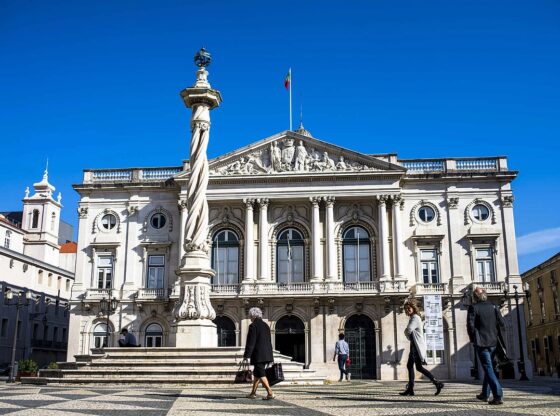
Among the 308 Portuguese chambers, the parties or coalitions that received the most votes in 2021 did not obtain an absolute majority in the municipal executive, which forced complicated negotiations with the opposition, especially as they were also in most cases in the minority in the respective municipal assemblies. This is what happened in Lisbon, as has been recalled by Carlos Moedas, who has often complained about the obstacles to his governance.
4009
This Sunday, 4009 elections will take place simultaneously across the national territory. When the Portuguese vote, they will elect 308 mayors and as many presidents of the Municipal Assembly. In addition to this, there will also be votes for 3393 parishes (this figure already includes the 302 parishes that emerged after the desegregation approved in Parliament).
56.778
Some of the parishes located in the most urban areas have more registered voters than the majority of Portuguese municipalities. Among these, Algueirão-Mem Martins stands out, which belongs to the municipality of Sintra, where 56,778 Portuguese people, as well as some resident foreigners, will be able to exercise their right to vote.
6
There are six Portuguese municipalities (Alpiarça, Barrancos, Castanheira de Pera, Porto Santo, São Brás de Alportel and São João da Madeira) with only one parish council, meaning that the territory of the two local authorities coincides. But the most special case of all is that of Corvo, where the Political-Administrative Statute of the Autonomous Region of the Azores allows there not even to be a parish council, with its powers belonging to the municipal council of that island.
17
This is the maximum number of people elected to the municipal executive, which only happens in Lisbon, where a president and 16 councilors are elected. The Electoral Law for Local Authorities Bodies also provides for a special status for Porto, with a president and 12 councilors, more than two municipalities (Sintra and Vila Nova de Gaia) that have a greater number of voters. Furthermore, the executives are made up of 11 elements in municipalities with 100 thousand voters or more, nine in those with more than 50 thousand and less than 100 thousand, seven in those with between more than 10 thousand and 50 thousand, and five in those where there are 10 thousand or fewer voters.
46,35%
Four years ago, abstention was 46.35%. Historically, in fact, abstention in local elections has never exceeded the 47.4% recorded in 2013. According to data from Pordata, four years ago, the municipality that abstained most was Sintra, where Basílio Horta was running for a third term, with practically 60%. Conversely, the municipality of Corvo, in the Azores, was where people voted the most, with almost 80% of voters.
82
Rondão Almeida is the oldest serving mayor, being 82 years old on the day he seeks another term as president of the Chamber of Elvas, the Alentejo municipality that he had already led between 1993 and 2013. With the difference that the former socialist mayor is now at the head of an independent movement. Also octogenarian, but only at the end of a possible new term, will be the social democrat Fernando Ruas, who is seeking re-election in Viseu.