
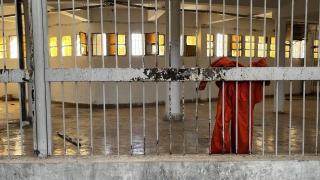

The Bashar al Assad regime launched a clandestine operation for two years to transport thousands of corpses from one of the mass graves largest in Syria another hidden in the desert more than an hour away.
A Reuters investigation has brought to light this secret operation with which the dictator tried to erase evidence of mass murders committed during the Syrian civil war and improve the international image of his regime.
The operation, which was called “Operation Move Earth”, It started in February 2019 and lasted until April 2021. During that period, for four nights, almost every week, between six and eight trucks transported earth and human remains from the Qutayfah grave to the chosen location in the Dhumair desert, dozens of kilometers away.
The Assad government began to bury in Qutayfah, on the outskirts of Damascus, the bodies of soldiers and prisoners who died in prisons and military hospitals around 2012, at the beginning of the civil war.
However, a Syrian human rights activist revealed the existence of this grave by making its approximate location public and disseminating images in local media in 2014. Its exact location was revealed a few years later, in court testimony and other media.
Improve your exterior image
The The idea of moving thousands of bodies arose at the end of 2018when Assad was on the verge of victory in the Syrian civil war, according to a former Republican Guard officer.
The dictator was waiting regain international recognition after years of sanctions and accusations of war crimes, crimes against humanity and human rights violations.
However, the magnitude of these crimes was still unknown as the regime did not allow any independent Syrian group or international human rights organization access to the prisons or mass graves.
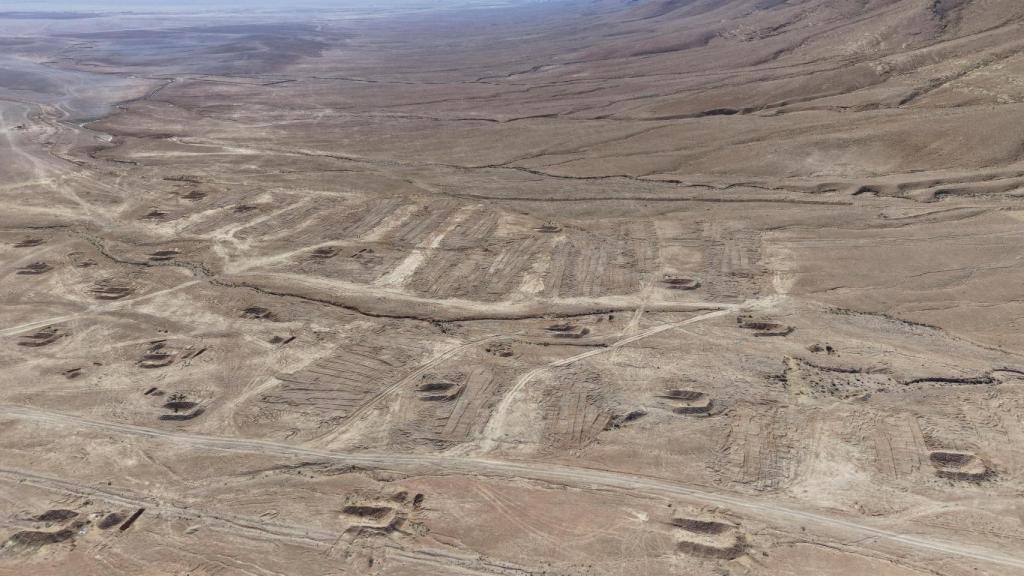
Aerial view of the mass grave in the Dhumair desert.
To discover the location of the Dhumair mass grave and detail the vast operation, Reuters spoke to 13 witnesses with direct knowledge of the two-year effort to move the bodies, reviewed documents from the officials involved and analyzed hundreds of satellite images of both graves taken over several years.
The new grave discovered in the Dhumair desert by the news agency with at least 34 trenches 2 kilometers long, It is one of the largest created during the Syrian civil war. Witness accounts and the dimensions of the enormous tomb suggest that tens of thousands of people could be buried there.
An unclosed wound
Reuters informed the Government of the new Syrian president, Ahmed Al-Sharaa, about the results of this investigation last Tuesday, with no response at the moment.
The agency has not been able to contact the former Syrian president or several military officers identified by witnesses as key actors in the operation, since after the fall of the dictatorship at the end of last year, Assad and many of his advisors fled the country.
More than 160,000 people disappeared under Al Assad’s security apparatus and are believed to be buried in the dozens of mass graves he created, according to Syrian human rights organizations.
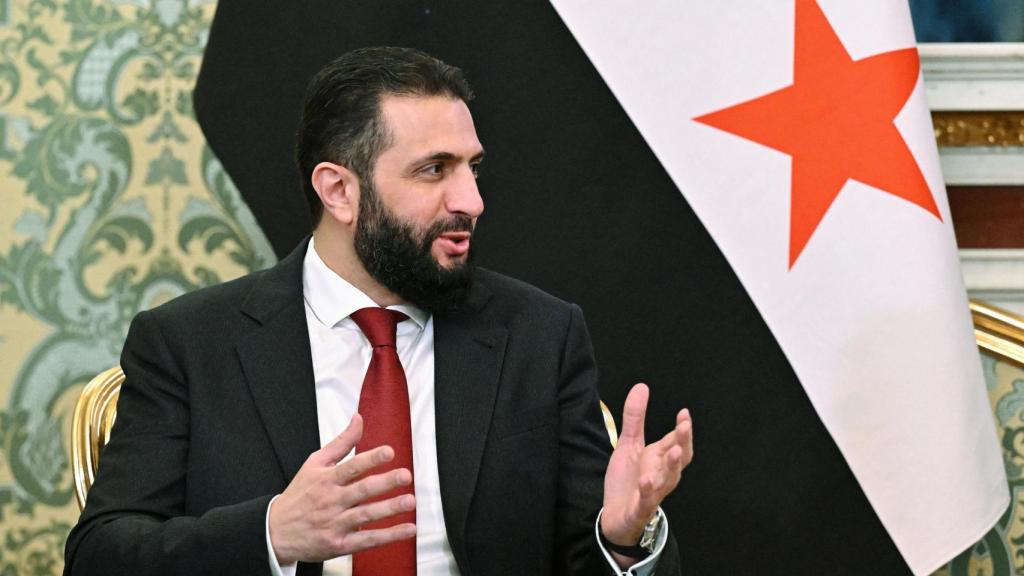
Syria’s new president, Ahmed al-Sharaa, has done very little since his arrival to find the thousands missing from the country’s civil war.
Reuters
Organized excavations and DNA analyzes could help trace their whereabouts, thus closing one of the most painful wounds in Syria.
However, the resources available in Syria are scarce, even the best-known mass graves remain largely unprotected and unexcavated.
And the country’s new leaders, who overthrew Assad in December, They have not published any documentation about the people buried in them, despite the repeated requests of the families of the missing.
Mohammed Reda Jehlki, director of the Government’s National Commission for Missing Persons, has stated that the large number of victims and the need to rebuild the judicial system make the work difficult.
It has announced plans to create a DNA bank and a centralized digital platform for families of missing people, and has flagged the urgent need to train specialists in forensic medicine and DNA testing.