
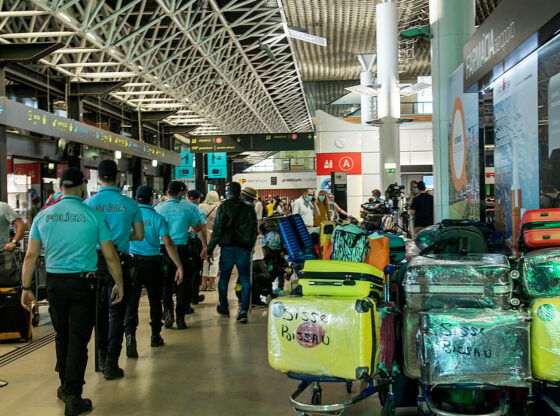

The PSP’s initial plan was to train 1,100 agents for the border control service. According to an official source from this security force to DN, the target was below, with 150 elements to receive this training. However, the same source rules out that the decision to extend the service commission of former SEF inspectors is related to the delay in reorganizing the device.
“It is completely incomprehensible that the three entities responsible for the borders – PSP, GNR and Internal Security System (SSI) – do not find a way to, among themselves, ensure what the Law imposes on them and, two years later, they continue to depend on almost 130 PJ inspectors to carry out these functions”, states the president of SPIC-PJ.
The union denounces that “the lack of human resources with which the National Directorate of the PSP justifies the request to extend the mission is a fallacy that reality completely disproves” and states that “the real reason for this dependence on elements of the PJ is the fact that the PSP insists on committing vast human resources to matters of criminal investigation whose competence the law attributes to the Judiciary Police”.
According to Rui Paiva, “with this option, we fell into the paradox of having Judiciary Police inspectors controlling borders at airports, a function of the PSP, while PSP agents continue to deal with situations of drug trafficking, human trafficking and falsification of documents that are the PJ’s responsibility”.
For the trade unionist, “the time has come for the Government to realize that it is facing an organizational problem in the system, and not one of training or lack of resources of the PSP”, with actions to end up “freeing the elements of the PJ to carry out the criminal investigation that is their responsibility, and, with this, freeing up even more PSP resources for their true missions”.